Be yourself; Everyone else is already taken.
— Oscar Wilde.
This is the first post on my new blog. I’m just getting this new blog going, so stay tuned for more. Subscribe below to get notified when I post new updates.
Be yourself; Everyone else is already taken.
— Oscar Wilde.
This is the first post on my new blog. I’m just getting this new blog going, so stay tuned for more. Subscribe below to get notified when I post new updates.

There are four main core classes in the modern schooling system: Math, Language Arts, Science, and History. In my high school, they require you to take four years of all of those except History. That actively shows the fact that school systems know History is useless. Compared to Language Arts, Science, and Math, History has a negligible amount of value in developing the skills and abilities to become successful in life. Language Arts, Science, and Math all have practical jobs that can be correlated with, but History doesn’t.
As someone who has taken many History classes, I realize that History puts much emphasis on memorizing facts and writing long essays that many don’t want to write (and don’t). I agree that there are several lessons that History provides, but isn’t taught properly.
As of now, History is taught chronologically, focusing on names, dates, and big events. That again makes it more about memorizing, and it’s harder to apply in the actual world. In our past, we have valuable lessons that students can benefit upon if they are taught rightly. For example, studying the history of American Independence could teach us valuable lessons about our government and political system. Instead of memorizing the branches of the government, there can be projects including making your own government. Teaching the lessons we learned throughout time as a lesson in history leads to people cramming for tests and not retaining any of the knowledge for future years.
Instead of students being forced to write essays and memorizing facts for big tests, there should be elements of this added into their Science, Math, and Language Arts classes. For example, essays focusing on information in Language Arts classes. Aspects of History, such as government, geography, memorizing facts, culture, and economics can be broken down and implemented in other classes. Or perhaps it can be turned into parts of electives. Things that are mandatory to know can be taught in Elementary School where there aren’t much actual subjects, but blurred lines of knowledge.
I always hated history in school. I understand these classes are supposed to help me understand the world, but it is taught ineffectively and few people are learning, anyway. It is not a subject that will help me get a job. Going into deep depth on events that had happened thousands of years ago is a waste. Knowing every detail of how America was colonized doesn’t help, anyway. Unless you work at a museum, you cannot help a company as a history major. After all, museums are basically the lowest forms of entertainment, and I would hate to have to learn random facts for almost no benefit to society. I understand that humans have a tendency to be curious, and History helps quench their thirst of knowledge. But those who don’t care for it shouldn’t have to learn history past Elementary School.
jokes lol
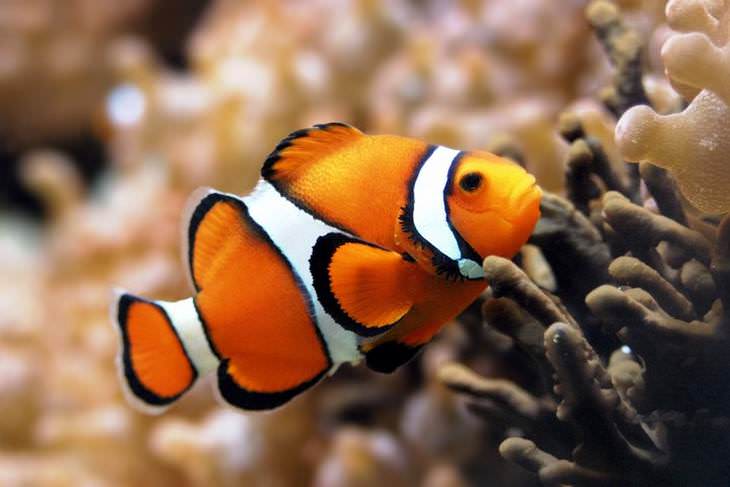
Although, we heavily depend on oceans and it covers more land than anything else, we don’t treat it with the respect it deserves. Oceans “[produce] over half the world’s oxygen and absorbs 50 times more carbon dioxide than our atmosphere” and it is disappointing that ocean pollution is a problem. A lot of the waste that we create ends up in landfills the size of countries killing marine life and ultimately killing ourselves. From dangerous carbon emissions to oil leakage and a literal “chokeful” of plastic, the oceans are in a alarming downfall and we need to stop it.
Carbon Emissions
To fuel our cars and such, we need to burn fossil fuels, which, in turn, causes too much carbon emissions. This heavily affects the amount of pH of the ocean, or the amount of acidification. According to NOAA, there could be nearly 150% more acidity than as of this date. The excess of carbon emissions will rip apart the ecosystem. The water will not become too toxic for us to drink and marine life to live in. Animals with their bones on the exterior, such as coral, mussels, clams, and lobsters will have their shells start melting on them due to carbonate deterioration. That actively demonstrates the overabundance of acidity will threaten the lives of the prey of the ocean. This could create an unbalance and an advantage for the predators. Tipping the scale in the battle of prey and predator harms both equally along with us. A lot of communities’ industrial backbones rely on seafood. With the shellfish industry reducing rapidly, it could put the people threaten the jobs of many as it “[supports] 1.2 million jobs in 2016, generating $144 billion in sales impacts and adding $61 billion to the GDP.”
In order to fix this, there is a simple solution and is commonly known. Simply, just drive efficiently, don’t drive when walking is possible among other things.
Offshore Drilling
The oil and gas industry plays a global role in our necessity for fuel, but is seriously harming the ocean. Along with the deadly fumes released, oil spills are a huge problem. In 2020 alone, “the total volume of oil lost to the environment from tanker spills in 2020 was approximately 1,000 tonnes.” Taking into the account that Covid-19 dominated most of 2020, yet we managed to still spill 1,000 tonnes should be more alarming than people make of it. Oil spills are remain as a crucial factor in one’s habitat for decades and do things that cannot be reversed ever. Oil spills “harm sea creatures, ruin a day at the beach, and make seafood unsafe to eat. It takes sound science to clean up the oil, measure the impacts of pollution, and help the ocean recover.” Unfortunately, most of the times, the oil is never cleaned up and it does its damage for maximum time.
We have to tools to make sure this is never a problem with technology like oil booms and skimmers, but we need to actually do it. The main barrier is neglect, which should be easy to break through.
Trash
Perhaps the worst of all, is the immense amount of trash. Plastic, otherwise known as the ocean killer, is a prime reason why the oceans are dying. Since a majority of plastics are single-use, they build up heavily. Plastic lasts “approximately 450 years to decompose in a landfill,” which means they will continue to build much faster than we can recycle or it biodegrades. According to Plastic Oceans, we produce over 380 million tonnes of plastic every year and half of that is single-use. Strangling marine life, crowding beaches, and disguising themselves as food, plastic has been controlling sea life since its creation.
We cannot let plastic ruin us and marine life. The only way to save us is cleaning up beaches and oceans along with doing our individual part to make sure it doesn’t create a vicious cycle. From not using those plastic bottles of water to picking up litter, everything is helpful. It takes the whole planet to safe the world.
links
https://oceanservice.noaa.gov/news/june14/30days.html#:~:text=Our%20World%20Ocean%20Provides…,carbon%20dioxide%20than%20our%20atmosphere.
https://www.noaa.gov/education/resource-collections/ocean-coasts/ocean-acidification
https://www.conservation.org/stories/ocean-pollution-11-facts-you-need-to-know
https://www.cbf.org/issues/offshore-drilling/index.html
https://www.itopf.org/knowledge-resources/data-statistics/statistics/
https://www.marineinsight.com/environment/10-methods-for-oil-spill-cleanup-at-sea/
Vidit Agarwal, April 2020
Usually, in the Agarwal household, we start swimming and it begins to feel like summer. Although we are going through a horrific dull time filled with all kinds of uncertainty, we are given the opportunity to spend more time with our loved family and learn more about ourselves and what we are. We can broaden our lives while also strengthening our mental mindset. I’ve learned to become stronger mentally while also becoming creative about the use of time in my new life. I am still surrounded by people. My friends and I bond over a game in which we are eggs shooting other eggs with egg puns as names of characters, guns, and maps. These are fun times. I would never see myself playing those types of games, but here I am doing it. The days pass slowly, as I await my birthday in May.
I recently started watching the Good Place, which is an improvement from old episodes of old shows I’ve already seen. Sports-wise, I paused my constant updating knowledge of everything basketball related. It was easy because nothing happened and nothing will. Sometimes, I scroll threw a couple of my friends gossiping about hypothetical gossip instead of the usual chatter about basketball and occasional sport’s related memes. It’s different, but this whole thing is different.
Nothing changed from March to April. I feel pretty happy. Soon, I will need to change my schedule, but not yet.
Vidit Agarwal
March 2020
Quarantine Diary 1
Contrary to popular belief, quarantine hasn’t been that bad. There are disadvantages, but it isn’t that big of a deal. I’ve spent a lot of time doing what I usually do outside of school hours. During school hours, I just text my friends, so I’m able to stay social. I do miss being able to play sports and stuff with people other than my brother. It helps that I live a privileged life, so it is still pretty enjoyable to stay inside all the time.
I am not bored of quarantine yet, but it did just start. I do miss sports the most. Usually, when I’m bored, I just turn on the TV and watch whatever is on. As a big sports fan, it is hard to talk to some friends without sport-related news. I have been reduced to watching the dumbest stuff on Youtube, but there isn’t anything better to watch. I’m still occupied by what I usually do, but soon I will need to get creative to keep myself entertained.
A big problem is staying healthy, I’m getting bored of the regular food that is healthy. I don’t feel like being healthy. I don’t really feel like doing anything, but watch TV because playing basketball by myself is getting boring. I have started running with my dad, biking, and swimming, but it’s hard to stay consistent.
My phone usage has been launched into the 70s from just 20 minutes. I constantly check my phone for messages. I miss the conversations I had with people who weren’t even that close friends. I never asked those people for their number, so I can’t talk to them. I have been engulfed in work from school and what I assigned myself. Having a plan makes it easier, but I do feel like online school is much easier. Although we do have the online schoolwork and the meeting via video chat, it is not the same. I only have approximately 2 or maybe 3 hours of work a day instead of the usual 6 hours at school, not counting extra time for homework. Somehow, it feels much more monotonous than the 6 hours in a classroom, and that’s what everybody has been doing for a lot of their life. Online classes are a lot calmer than being around people constantly creating all that anxiety, peer pressure, and other problems school creates. Being in a classroom is always insane. I miss the chaos.
Staying social is very important. I need my friends. They need me, at least that’s what I think. So far, the most fun I had was when I met one of my friends face-to-face. I was on one side of the sidewalk and he was on the other. We walked and talked for more than 3 miles. The conversation just flowed in a way that doesn’t happen usually. I video chat every day from around 3 to almost 5. We play iMessage games and crack jokes, and it is the most fun part of my day.
Maybe I will update this, but this is how I feel right now. I don’t know how long I can handle this, but so far it has been relaxing.
Vidit Agarwal, March 2020

It may be hard to realize, but caffeine is a drug. According to the American Foundation of Pediatrics, 75% of teenagers and young adults devour caffeine by an average of 400 mg of caffeine a day. That is four times more than the amount humans can tolerate. People consider it funny when they say “I need coffee,” or “I can get through the day with this cup of coffee,” but they are gradually being addicted to it. Many people who drink coffee daily become physically dependent on it, so a person who is used to drinking loads of coffee or other caffeinated beverages can experience physical and mental symptoms that occur after quitting or reducing the intake of caffeine like smoking.
We all have heard of what happens when you use a drug and get high as a result. It feels good and you crave to do it constantly. Eventually, you would have to drink more and more to have the same effects. The same results occur when you have too much caffeine. Caffeine is as addictive as nicotine, and it has similar effects on your body. Not only is it hard to get the same “high,”, but you develop an addiction. If you quit drinking coffee, you get the headaches and other inconveniences that leave you running back for more.
Coffee and other caffeinated beverages have been known to increase blood pressure. The rise of blood pressure is caused by a resistance in your heart that makes it tougher for you to pump the blood for your body. This means that caffeine makes your heart work harder to do the same things you could have done before becoming addicted to caffeine. At this point, your body would refuse the reality and associate it to the fact that you’re growing old. High blood pressure can create severe heart diseases like coronary heart disease. In other words, drinking caffeinated drinks will force your heart to work double-time just to pump the standard nutrients and oxygen needed to live through your body. For those who previously had high blood pressure, perhaps it’s time to cut back on the cappuccinos.
According to Healthline, caffeine is a prime reason in which most stomach problems occur. When you drink coffee, you enhance the generation of natural acids in your stomach. It sounds good, but this inflation of acid can dissolve your stomach lining, which can allow bacteria and diseases to enter and give you long-lasting tummy-aches. Not only is your stomach in danger, but coffee can also irritate your small intestines, inducing pain in your stomach, and cause diarrhea.
Caffeine also affects the brain and central nervous system. Most people drink coffee to make them feel awake and give them energy. Coffee doesn’t cause your body to produce more energy but shuts off the part of your brain that registers tiredness. Coffee turns off the receptors in your brain that recognize a certain chemical that signals fatigue called adenosine. By turning off the adenosine receptors, caffeine tricks your brain into thinking you are more focused and awake than you really are. Eventually, you would feel even worse since you worked on the energy you didn’t even really have. Finally, coffee interferes with your body’s ability to digest calcium, preventing it from nourishing your bones. Excessive caffeine intake can lead to bone thinning, even if the drink is loaded with milk.
The worst part of this drug is that it is acceptable in society for humans to be addicted. People think it is okay to drink as much caffeine as they want, and they don’t even understand that they are slowly killing themselves. Caffeine addiction is a very serious problem and if we don’t raise awareness, then this addiction will get out of hand.
Work Cited:
Owens, Judith. “Insufficient Sleep in Adolescents and Young Adults: An Update on Causes and Consequences.” American Academy of Pediatrics, American Academy of Pediatrics, 1 Sept. 2014, pediatrics.aappublications.org/content/134/3/e921.
Olson, Natalie. “The Effects of Caffeine on Your Body.” Health line, 2017, http://www.healthline.com/health/caffeine-effects-on-body#1.
Felman, Adam. “Caffeine: Effects, Risks, and Cautions.” Medical News Today, MediLexicon International, 7 Nov. 2019, http://www.medicalnewstoday.com/articles/271707.
Image Credit:
“Addiction Center.” Addiction Center, http://www.addictioncenter.com/stimulants/caffeine/.
Vidit Agarwal April, 2020
The Box, the number one song on Billboard, amassed over 68 million streams according to Complex by January 13. Roddy Ricch, the artist behind this hit, created a bizarre and catchy beat that featured lyrics filled with vulgar slang peppered with crude profanity. Most rap songs, like The Box, display an intense beat and a rags-to-riches storyline that seems to addict teenagers. Many parents are worried about their children being influenced by the fashions, actions, and language used by rap artists like NLE Choppa and YNW Melly. YNW Melly and Roddy Ricch have each spent considerable time, and I, along with many, see these people like celebrities. Don’t worry parents, this doesn’t indicate a significant change in your teen’s values or goals. Rap music is a positive genre of music like all the others.
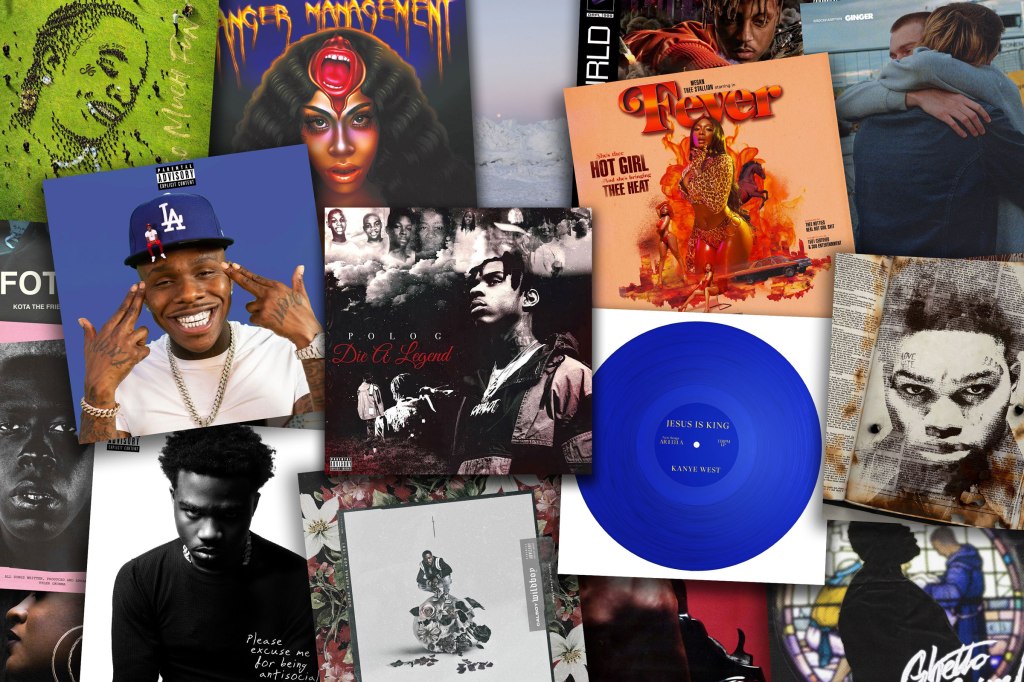
Rap music is misunderstood. Parents often see rap music as negative and only seem to see the countless expletives. Many parenting articles identify rap music as a catalyst for problems with teenagers. In reality, rap music is positive and can serve the purpose of shedding light on some issues people face. Just because a rapper raps about some questionable subjects in their music does not mean that they intend to influence teenagers down a dark path. Rap music is entertainment, like horror movies or R-rated shows. I don’t see the reason for pushing teenagers away from the genre they wanted to hear. The bottom line is that all rap music is not degenerate.
Many rappers express their struggles in the inner-city and “hood” areas while growing up. Them overcoming their conflicts is what most rap artists like to rap about. This message can give hope to many youths across America who live in similar circumstances. For example, Roddy Ricch used to live in a challenging neighborhood, Compton. He had to steal and act tough just to survive. He used to rap and sing to cope with his sad life. When he shared his stories about his challenging childhood and about succeeding despite living without parents or with a drug-addicted parent, a teenager with a similar plight may believe that he can also get through his struggles.

Rap music has been a tool to express their thoughts against the negative elements in this world, such as violence and guns. Many non-rapping artists use their lyrical gifts to promote peace and anti-violent acts. Rappers promote peace, too, even though they use a darker method. By conveying messages about violence and prejudice, rap allows teenagers to make positive changes in their own lives. Rappers such as the Tupac were often criticized for their lyrics, which painted a bleak picture of America. While some lyrics were probably made to be catchy and cool, they also shed light on America’s problems, especially those in the hood. When rappers rap about violence, drug addiction, and poverty, they are doing it to promote awareness. When someone listens to this genre, he or she may do it for entertainment, but he or she will hear these dilemmas and these issues that people have to face.
Some rappers use their musical platform to show how great they are. As a listener, it is inspiring to listen to feel-good music and you have the “live life with a purpose” motto. Thus, most rap fans, like me, are always glowing with confidence. You may not realize it, but rap music makes you feel good about yourself and you feel cool. If you are one of those quiet people with the skill and value but don’t let the world know, rap music can help let you bring out the more arrogant, but confident side of you.

While the words rappers choose can unquestionably be deemed a bad influence, it does not mean that all rap music is wicked. Churches use Christian rap in their service to send a message. Police officers, firefighters, and teachers use it to spread their messages to help the youth learn and connect with what the youth likes. Rap music is a magnificent tool that can be used for extraordinary purposes. When critiquing rap music, one talks all about the surface. Some people can only see the swear words and nothing else. To understand rap music, you need to go beyond the surface and discover the true message of the song.
Image Credits
Klinkenberg, Brendan, et al. “20 Best Hip-Hop Albums of 2020.” Rolling Stone, 30 Dec. 2019, http://www.rollingstone.com/music/music-lists/20-best-hip-hop-albums-of-2019-931888/.
September 2019, Vidit Agarwal
Intro
Apple started with three men—Steve Jobs, Steve Wozniak, and Mike Markkula—who together in the late 1970s designed and marketed the Apple series of computers. It was the first commercially successful line of personal computers, and led to the Apple Lisa in 1983—the first computer to use a mouse-driven GUI (graphical user interface). One year later, the Apple Macintosh was born and with it, the Apple legend began to grow. Apple Inc became the leading American corporation that manufactures computer software and consumer electronics. The company is credited for designing products such as the Macintosh range of computers, the iPad, iPhone, Airpods, and iPods. Computer software made by this company range from the safari web browser, the iOS, and the iTunes among others have grown considerably. The company is currently operating over 350 stores in the United States alongside an online store that offers both software and hardware. A year ago, Apple Inc was ranked as the largest company in the globe. It is equally a company with the largest market in the world with regard to both revenue and profit generation. The company was founded in 1976 and later incorporated the following year. Before the year 2007, this company was known as Apple Computer Inc. The shift to the current name reflects the ongoing innovation in its range of products. By September last year, this company had nearly 132,000 employees on full term basis. The company has a very established reputation in the electronics industry. The shares of this company are traded on the NASDAQ stock exchange market for 213.28.
History
Apple was founded by the late Steve Jobs, Ronald Wayne, and Steve Wozniak in the year 1976. The company was later opened the following year. From 1976 to 1980, the company concentrated on the production and sale of the Apple I and Apple II computers. With the introduction of computer designers in the late 70s, the company adopted the Apple III computers. They were later forced to rival at both Microsoft and IBM forcing them to enhance their products. Between the year 1981 and 1985, the company faced a battle of choices between products with regard to the Macintosh and the Lisa. Later in 1983, the Apple Lisa was given priority over the Macintosh and became the first personal computer traded by the company. Though the Lisa had the graphical user interface, its ability to be sold was limited by its high pricing. The sale of the Macintosh was launched in 1984 but its ability to be sold was equally limited by high pricing. The company later shift to the Laser writer which traded well at a customer friendly price.
Having survived several struggles, the company launched the Macintosh Portable in its range of products in the year 1989. Later in 1991, the company launched the powerbook and system 7. The later upgraded the operating system increased revenue generation for the company. With the success offered by the introduction of the Macintosh, the company launched the Centris to compete with other consumer software on the market. The later did not amount into any profits for the company following consumer dissatisfaction. The company later plunged in to the design of alternative products from 1991.
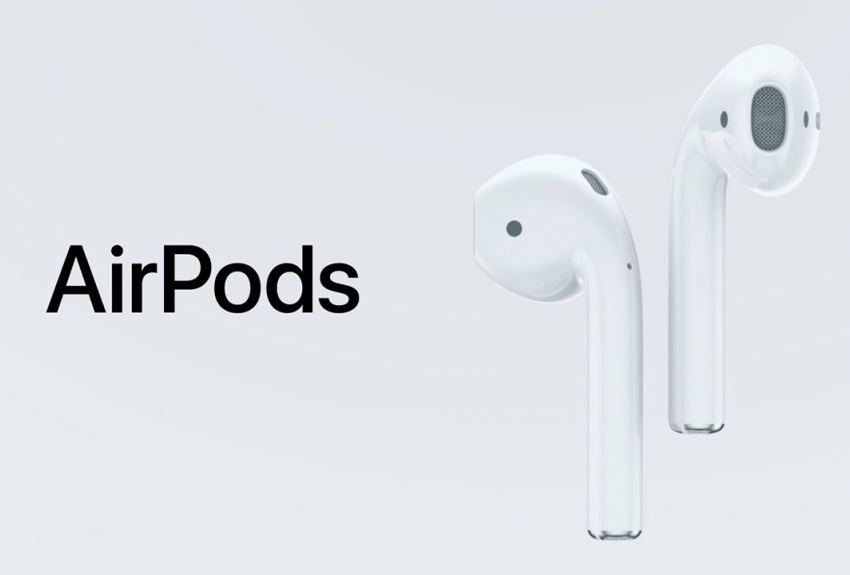
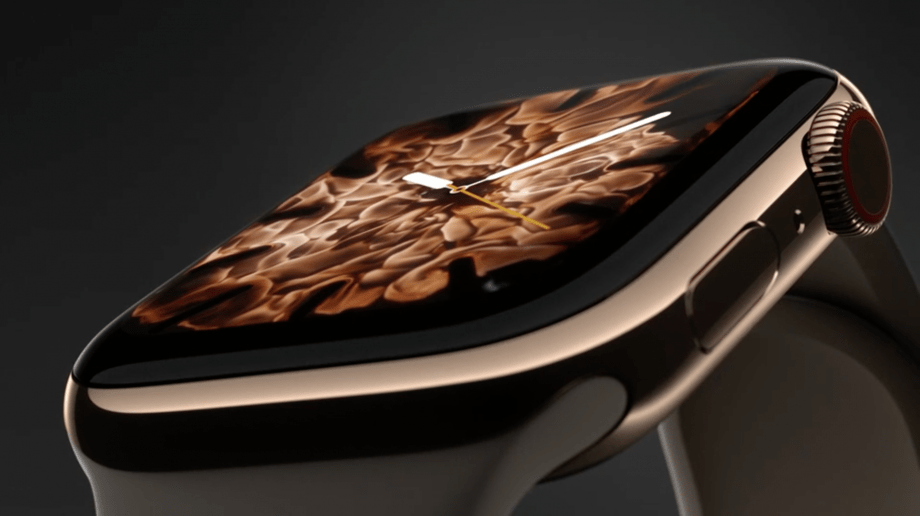
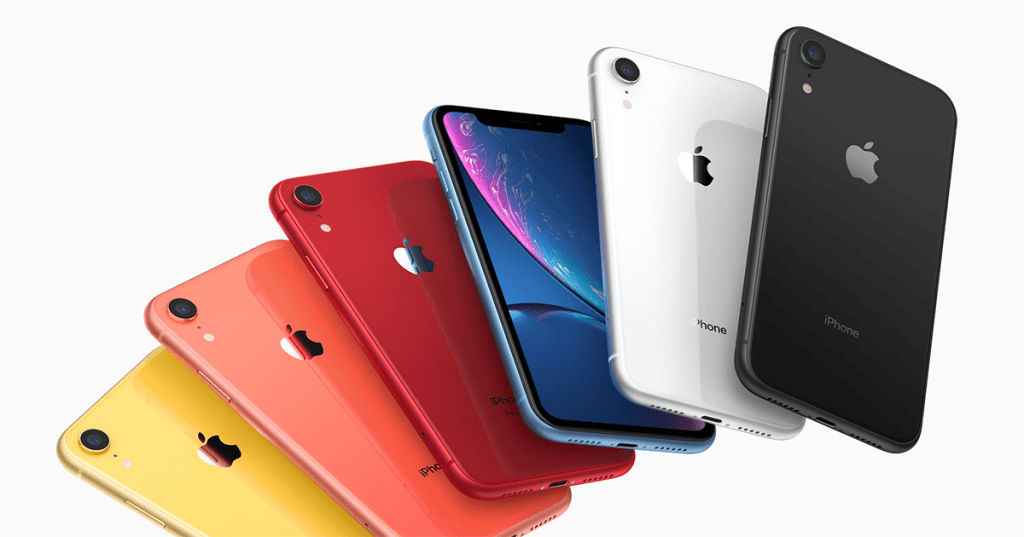
In order to create a better computing platform, the company partnered with both Motorola and IBM in the year 1994. During the same year, the company launched the Power Macintosh. Apple Inc returned to profitability in the period between 1988 to 2005. The company also managed to acquire several properties and companies during this time. Later in 2006, the company began manufacturing Intel based computers which increased its profitability. The introduction of the iPhone, the iPod, and the iPad in the period between 2007 and 2011 has increased its market share and profitability for the company. The heavily doubted Airpods and Apple Watch have proved to be must haves when they released in 2016 and 2015. The company is currently headed by Tim Cook following the retirement and death of Steve Jobs.
Market
Apple is a company based on consumer goods and competes with various other consumer goods companies. Having established a unique reputation in the range of its products, the company enjoys a very large customer base around the entire globe. Apple Incis among its highest traded products is the Airpods which enjoys global recognition as one of the best tech products currently.
Conclusion
Apple Inc is leading in the technology industry. Though the company faces stiff competition from IBM, HP, and Dell in computers, and Samsung and Google in iPhones, its business strategies have always put it on top. The company is currently enjoying an added competitive advantage in the technology industry following the success in Airpods and Apple Watches.
Bibliography
“Colorful Apple Logo Wallpaper.” Eskipaper, http://eskipaper.com/pic/get
GoodFon – wallpaper on pc and phone. (2019). Download wallpapers by subject hi-tech. [online] Available at: https://www.goodfon.com/wallpaper/mak-makbuk-eppl-nout-poppy-macbook-apple-laptop.html [Accessed 13 Sep. 2019].
Pinterest. (2019). Pin on Amazing and Incredible iPhone 7. [online] Available at: https://www.pinterest.com/pin/47076758583931711/
Designtaxi.com. (2019). DesignTAXI – Interstitial Advertisement. [online] Available at: https://designtaxi.com/interstitial.html?v=1&advertiser=External&return_url=https%3A%2F%2Fdesigntaxi.com%2Fnews%2F401628%2FWatch-How-Apple-Watch-4-s-Live-Wallpapers-Were-Made-Using-Real-Fire-And-Water%2F [
Mic. (2019). Why do cheaper iPhones come in better colors than the expensive ones?. [online] Available at: https://www.mic.com/p/the-iphone-11-colors-are-better-than-the-pros-why-doesnt-apple-make-its-best-phone-in-its-best-colors-18745576
Rawlinson, N. (2019). Apple was 41 years old in April, here’s some history. [online] Macworld UK. Available at: https://www.macworld.co.uk/feature/apple/history-of-apple-steve-jobs-mac-3606104/
Vidit Agarwal, August 2019
The Facts
The Trump administration imposed tariffs on $34 billion worth of Chinese goods, including flat-screen televisions, aircraft parts, and medical devices. The goods marked for tariffs will now face a punishing 25% tax when they’re imported into the US. The point is to punish China by making Chinese products more expensive for American consumers and businesses to buy. Trump stated that if he put tariffs on Chinese goods, then the trade deficit would decrease. If Chinese products suddenly become more expensive, they’ll buy those same products from somewhere else, and Chinese businesses will lose money. China immediately accused the US of starting “the largest trade war in economic history to date” and responded by imposing 25% tariffs on $34 billion worth of US goods, including soybeans, automobiles, and lobsters.
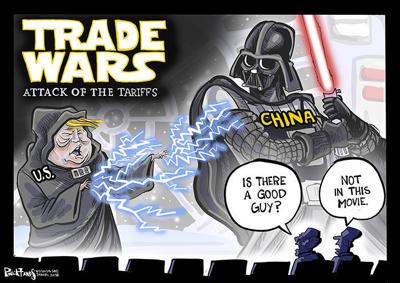
The Trump administration initiated these tariffs after concluding an investigation into some of China’s most controversial trade practices. The US’s new trade barriers are designed to penalize China for doing things like forcing foreign businesses to hand over their most prized technology to Chinese companies — many of which are state-owned — in exchange for access to their market. The US imposed taxes on an additional $16 billion worth of Chinese goods in two weeks. Trump also said that, depending on how China responds to his tariffs, he’s considering hitting another $500 billion worth of Chinese goods.
Both the US’s and China’s initial round of tariffs against each other are designed to hurt both countries economy’s by basically targeting their weaknesses. The US is targeting high-tech Chinese goods to put economic pressure on Beijing’s “Made in China 2025” program — a Chinese government plan to transform China into an advanced manufacturing powerhouse. China has deliberately targeted big US agricultural exports like soybeans that come from states in the heart of Trump country, where neither the president nor his party wants to see a failing economy or job losses. So that means we’re officially in a trade war with China? It depends.
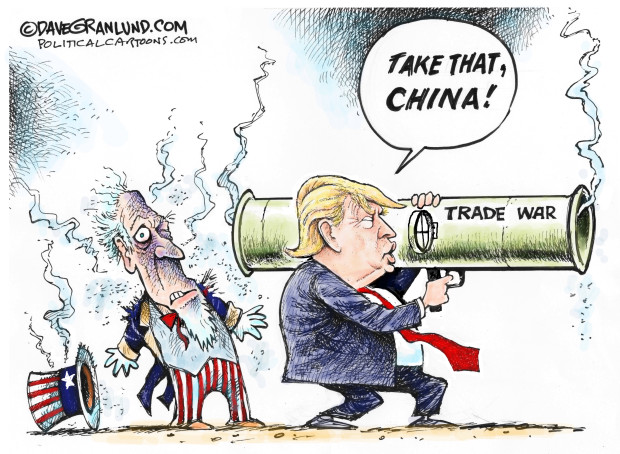
Countries get into tussles over trade all the time. To sort them out, they can go to the World Trade Organization and have them decide who’s right and who’s wrong; they can negotiate directly with each other to strike a deal; or they can just impose tariffs on each other’s goods. The last option has the potential to turn into a trade war. If two countries shoot at each other’s economies then it’s not a huge deal. But if the punch-counterpunch continue with each country putting more and more tariffs on one another, then you’ve got a trade war.
My Opinions
I believe the United States could have avoided its current predicament by using the World Trade Organization’s existing resolution, where they help out instead of letting it rest on the Chinsese and American shoulders. This means that instead of asking help from a “grown-up,” like the World Trade Organization, they are trying to solve it by themselves even though they both act like incompetatent toddlers in this war.
Still, from the perspective of a single country, starting a trade war could potentially be justified if the end result is them winning. Such a victory can only be achieved when the country has a bargaining advantage that its opponent doesn’t — in other words when it can impose more pain on its opponent than it expects. The longer the trade war continues, the more importance is there for the country to win in order to compensate for the damage caused. So, after nearly 18 months of escalating disputes between the U.S. and China, where are we? Is either side winning, and can any actions be justified for the economic harm that both sides have already experienced?
After days of reasearch, my answer is sadly China. Twenty years ago, the situation might have been different. China was dramatically underdeveloped, and it wanted access to Western technology and manufacturing techniques. It was a different time and the result would be different. Now, China has most of what it needs, and what it doesn’t have it can easily obtain from others outside the U.S. The fastest growing markets for the best items China produces, like laptop computers and cell phones, are in developing regions such as India, Latin America, and Africa. In contrast, China itself is a market that the U.S. can hardly ignore. By the end of 2015, Chinese consumers bought 131 million iPhones. The total sales to U.S. customers during the same period stood at only 110 million. And iPhones are only a small part of U.S. exports. Boeing, which employs 150,000 workers in the U.S., estimates that China will buy some 6,810 airplanes over the next 20 years, and that market alone will be worth more than $1 trillion.
When Trump started the trade war, the most immediate effects was felt by companies like Walmart, which import billions of dollars of cheap goods that are bought mostly by the people who voted Trump into office. The prices on almost all of these items would quickly skyrocket beyond the reach of the lower economic brackets—not because of manufacturing costs, but because of the tariffs. The result would be an economic war that China is infinitely better positioned to win.
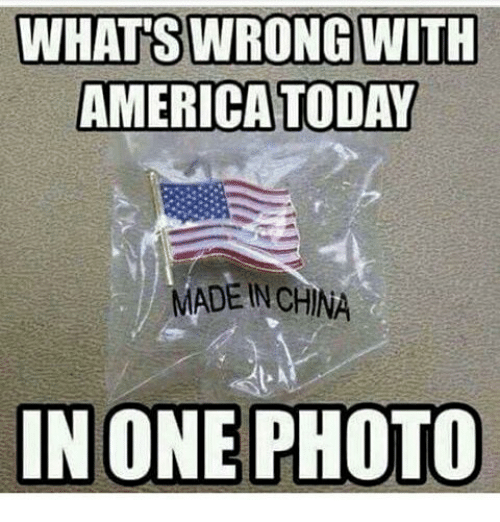
China’s foreign currency reserves now stand at more than $3 trillion. In contrast, the U.S. has foreign exchange reserves that hover at around $120 billion. Trump’s tariffs would automatically trigger penalties against the U.S. in the World Trade Organization. While it might take a while for that to happen, the turmoil would be catastrophic for American business and employment. China, on the other hand, would emerge relatively unscathed.
In fact, the importance of the U.S.-China relationship is already being challenged by other players. The Chinese would happily shift their trillion dollars in future aircraft purchases to Airbus, a European firm that is already building a plant in China to finish assembly of large, twin-aisle jets. As for automobiles, most Chinese would just as soon drive any American car.
It doesn’t look good for the United States, but that’s just me. Maybe Trump has some special weapon up his sleeve, but it doesn’t look good for the red, white, and blue.
Mercurynews.com. (2019). Cartoons: Trade Warz China vs. United States. [online] Available at: https://www.mercurynews.com/2017/11/16/cartoons-donald-trump-and-china/
Mercurynews.com. (2019) Cartoons: Donald Trump and China. [online] Available at: https://www.mercurynews.com/2019/05/14/political-cartoons-trade-war-2/
Politicalmemes.org. (2019) Whats wrong with the US in just one photo: https://www.scmp.com/comment/insight-opinion/united-states/article/2169277/not-just-containment-americas-real-goal-may-be
Vidit Agarwal , August 2019

Ever since Tom Holland’s Spider-Man was introduced in 2016’s Captain America: Civil War, it was clear he was being readied by Marvel Studios to become the spotlight in the MCU’s future. But now it looks like those plans will no longer come to fruition, as it was announced earlier this week that Sony and Marvel have decided to end their partnership with Marvel Studios and Disney in producing new Spider-Man films, effectively putting an end to Spidey’s time in the MCU.
So what does this mean for everyone’s favorite Marvel character? The good news is that Sony has a solid foundation to work from: Holland is widely regarded as the best onscreen version of Peter Parker we’ve seen, and it’s safe to assume that the strong supporting cast of Marisa Tomei, Zendaya, and Jacob Batalon will also remain intact. The other key part of that nucleus is Homecoming and Far From Home director Jon Watts, and thankfully he is still signed on for a couple more films. Additionally, the fantastic Spider-Man: Into the Spider-Verse offers some comfort – if Kevin Feige is no longer in the produce’s chair, then Phil Lord and Chris Miller would be an excellent choice to help guide Spidey in this new phase.

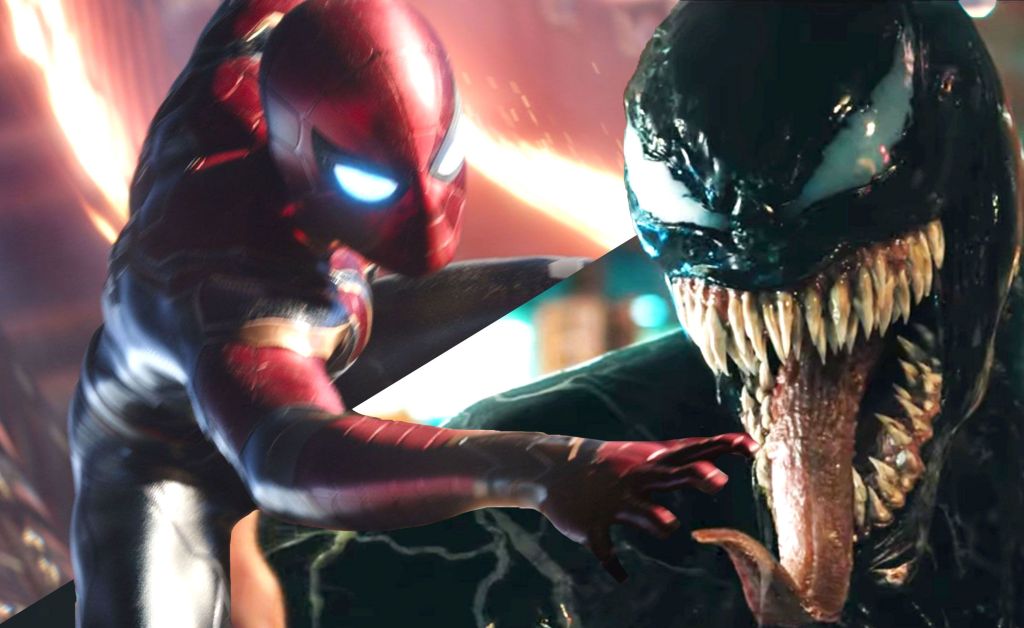
It’s also now likely that Spider man will be sharing the screen with Venom sooner than later. A sequel to the a Venom/Spider man cross – which proved popular at the box office, with the experienced Andy Serkis calling the shots. Having Venom, Carnage, and Spidey on screen together for the first time is a tantalising and potentially very lucrative prospect that Sony surely have on their minds.
Sony going it alone does come with a few concerns though. Part of the reason that the partnership with the MCU came to be was that The Amazing Spider-Man 2 was a dud with both critics and fans, and its box office take is the lowest of any Spider man film in the last two decades. Comparatively, the MCU quickly restored the hero to onscreen glory, and Far From Home became the first solo Spider-Man film to cross the $1 billion mark earlier this year.
While both the MCU and Sony will survive the split, it can’t help but feel like the biggest losers in all of this are the fans.
Speaking of the MCU, there was nary a mention of Spidey’s name when Kevin Feige revealed Marvel’s Phase 4 slate back in July, and now we know why. Spider-Man’s absence gives the MCU a number of storytelling issues as Far From Home went to great lengths to further safely install Peter Parker into that universe. Indeed, at a crucial moment in that film, a key piece of dialogue has Happy telling Peter that “I don’t think Tony would have done what he did if he didn’t know you were going to be here after he was gone”. It’s only taken a couple months for this to become a heart-wrencher.
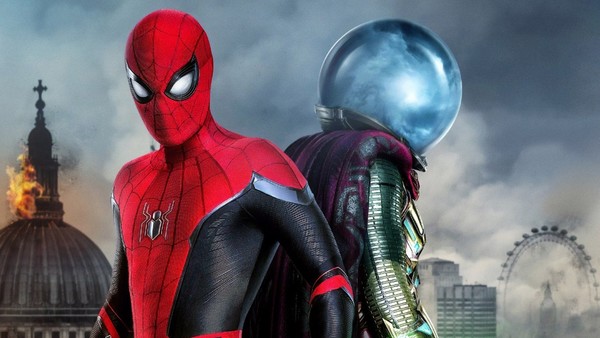
There’s also the question of whether or not the MCU at large will address Spidey’s absence or just ignore him entirely. Luckily, Far From Home’s conclusion (Spoiler Warning!) – which saw the world learn that Peter Parker is Spider-Man, right after Mysterio (Jake Gyllenhaal) made it look like he was a murderer – makes either option viable. Perhaps the MCU’s other heroes feel like they can no longer trust Spidey, who has since gone into hiding? There are many theories, but I can see this one work the best.
Which begs the question… will Marvel and Sony resolve their issues and reverse course? Reports suggest that the reason for the break-up is down to money (which Disney has a lot of), so there’s a possibility that this is all a negotiating tactic and a deal will be made somewhere down the line.
In any case, while both the MCU and Sony will survive the split, it can’t help but feel like the biggest losers in all of this are the fans. Sony and Marvel’s partnership was yielding some of the best Spider-Man moments ever committed to the big screen, thanks in no small part to the fact that Spidey was finally interacting with Earth’s Mightiest Heroes. That’s something we thought we’d be seeing much more of, and now that we have proof of how great that interconnectivity is, going back to Spider-Man films where that’s no longer possible is a gut-punch.
I apologize for the delay, but with school starting, I was not able to post. I will get more regular, I promise.
May 2019
Vidit Agarwal
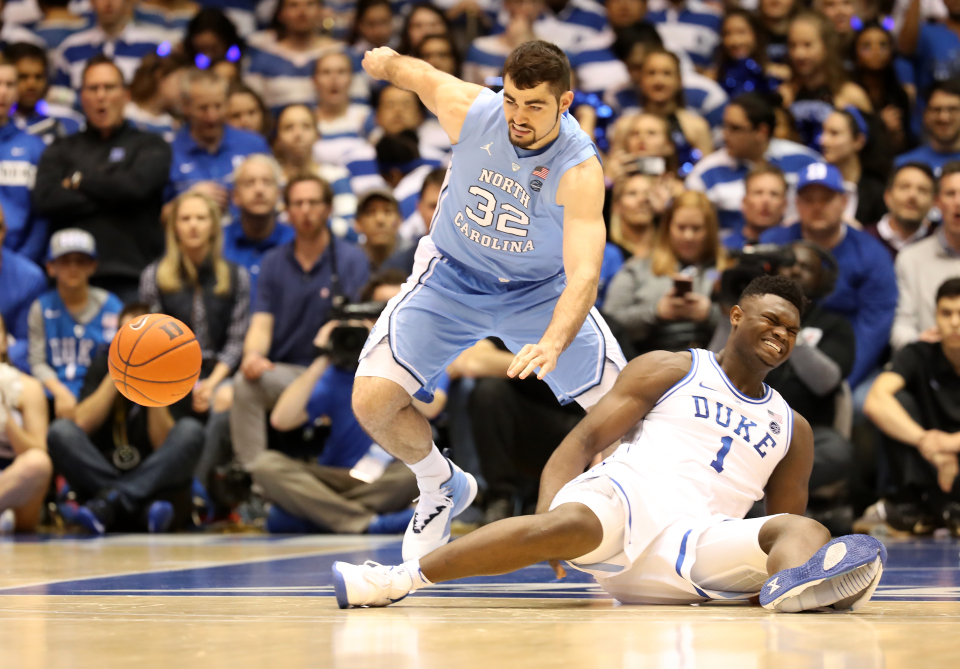
The annual basketball spectacle called March Madness is the NCAA’s big revenue raiser and what student-athletes prepare for their entire year. It receives lucrative television income associated with this 68-team tournament. But March Madness is but a small portion of the madness associated with college sports that occurs pretty much year round. For one, many believe that you should play the players who work so hard and without them the entire organization will fall.
There are three huge problems with contemporary college sports. First, they are exploitative, full of lies, scandals, and corruption. Second, they are increasingly expensive, for many students significantly raising the already high cost of a college education. Third, they are probably even suspicious from a public health perspective, particularly with respect to the most highly attended sport, football.
To be sure, some college sports are wholesome, providing physical fitness, leadership skills, discipline, recreation and entertainment to student-athletes and others, often at a relatively low cost. Most intercollegiate competition outside of NCAA schools or even within NCAA Division III fits this category. The problems are particularly seen at the over 250 so-called FBS (Football Bowl Subdivision) and FCS (Football Championship Subdivision) schools, and to a lesser extent in NCAA Division II institutions.
The NCAA enforces rules that prevent paying players (euphemistically called “student-athletes”) what they would make in a competitive labor market. A superstar quarterback or starting basketball player sometimes generates literally millions in revenues for his university but receives only a tiny portion of that in scholarship assistance and a small additional spending allowance. Money that would ordinarily go largely to players goes mainly to those who recruit them, namely coaches. Nick Saban makes over $11 million annually, earning about as much in a month as his boss, the University of Alabama’s president, earns in a year. The quarterback who led the Crimson Tide to a national football championship in January, Tua Tagovailoa, earns less than one percent of the earnings of his coach. Contrast that to professional sports.
To get and retain enormously profitable players, all sorts of corruption occurs. Academic standards are obliterated to keep underperforming students in school. In North Carolina, thousands of students, many of them athletes, took phantom courses that made a mockery of academic integrity and the NCAA did nothing to stop them..
The costly nature of sports is most prevalent at the conferences serving “wannabe” teams in the shadow of the Power Five Conferences. The typical Mid-American Conference school, for example, loses about $20 million annually, typically roughly $1,000 for every attending student. (probably more if the people counting weren’t feeling sorry for them)
The growing evidence of the very serious long-term impairment from concussions has led to virtually no important changes to college football. Players are not only underpaid, but not compensated for debilitating medical problems apparent only later in life.
What to do? As David Ridpath, president of the Drake Group, a reformist organization favoring major changes puts it, “anything is better than what we have now.” I know of at least five different ways to deal with the problem.
One approach would be to professionalize college sports, paying the athletes. A second idea would be to incentivize schools to graduate athletes, partially by reducing the time spent on sports (shorter practices, starting playing eligibility only in the sophomore year, having fewer games and postseason appearances, etc.) Accept smaller television revenues, cutting costs by reducing coaching salaries and massive staffs. A third approach would be to effectively create minor non-collegiate professional leagues overseen by the NBA and NFL. A fourth approach is for the academically respectable conferences like the Big Ten, home to academic powerhouses like Northwestern and Michigan, to emulate the Ivy League by curtailing excesses, even telling the NCAA goodbye. Cowardly university presidents don’t have the guts to take on their own bosses (trustees) and powerful alumni to do this, but if they unite perhaps they would. A fifth idea is to have a blue ribbon commission of eminent Americans make recommendations for change, incorporating parts of the other approaches. All these ideas have advantages and disadvantages. Doing nothing, however, is not a good option.
If these changes are not made ASAP then the sports world will collapse as we know it. Due to the way the NCAA works, NBA and NFL rookies are getting injured so easily because they are not properly prepped for the league. In fact, a third of the rookies drafted in the first round missed more than 50 games in the 2018-19 NBA season. Another 20% were elected by their teams to not play for long stretches due to being not very useful or simply their teams are protecting them from playing and possibly getting injured. Every fan is missing out on the chance to see players like Nick Bosa of the 49ers and Micheal Porter Jr. of the Nuggets. This is not benefiting the NCAA, so no one wins. Not the NCAA because they lose money, not the players because they are getting injured, not the teams because they lose their player, and not the fans because they miss out on their chance to watch young kids grow into the player they hoped they could be.

 Sports, Philosophy, Economy, Politics, Social and more...